
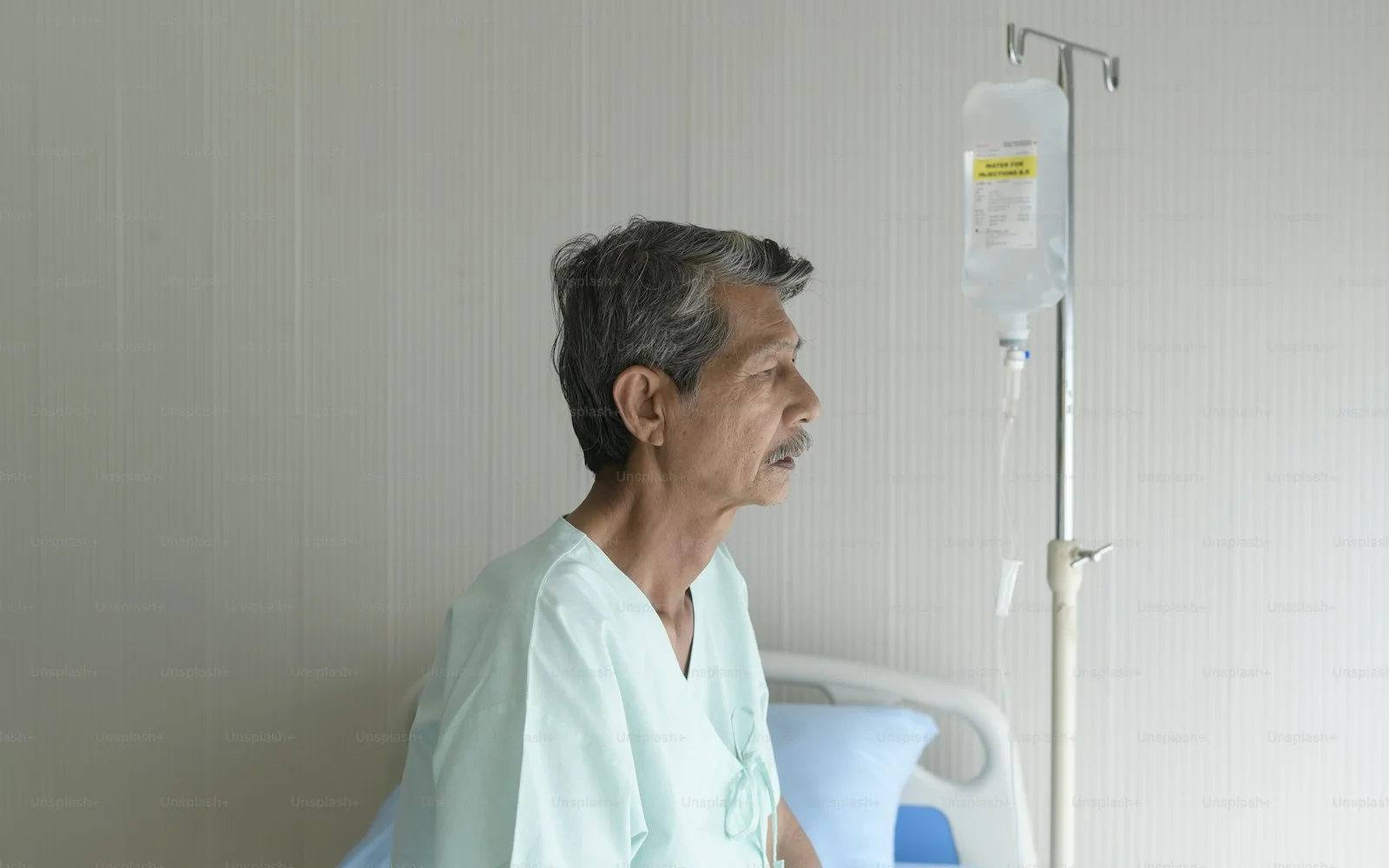
Wernicke-Korsakoff syndrome is one of the most preventable — and most devastating — complications of alcohol use disorder. It is also one of the most frequently missed. At Concierge Home Detox, we approach every in-home alcohol withdrawal as a neurological event first and a symptom-management challenge second. Our attending physicians and detox nurses build IV thiamine replacement into the first hour of care, before benzodiazepines, before glucose infusions, and before the resident has ever spoken about cravings. For high-net-worth patients whose cognitive performance is central to their identity and profession, thiamine sequencing is not a footnote in the detox plan. It is the plan.
This guide explains how our clinical team prevents Wernicke encephalopathy and its chronic sequela, Korsakoff psychosis, during in-home alcohol detox for executives and professionals.
Why Thiamine Deficiency Is a Silent Emergency in Alcohol Withdrawal
Chronic heavy drinking depletes thiamine (vitamin B1) through three concurrent mechanisms: reduced dietary intake, malabsorption at the jejunum from ethanol-induced enterocyte injury, and impaired hepatic conversion of thiamine to its active coenzyme form, thiamine pyrophosphate (TPP). By the time most professional-class drinkers begin detox, their whole-body thiamine stores — normally around 30 mg — have collapsed to well under a five-day metabolic reserve.
The Metabolic Chemistry Behind Wernicke Encephalopathy
TPP is a required cofactor for three enzymes central to cerebral glucose metabolism: transketolase (pentose phosphate pathway), pyruvate dehydrogenase, and alpha-ketoglutarate dehydrogenase (Krebs cycle). When TPP falls, neurons in the mammillary bodies, periaqueductal gray, and dorsomedial thalamus lose the ability to generate ATP oxidatively. Focal edema, capillary leakage, and neuronal necrosis follow within days. Once Wernicke encephalopathy progresses to structural Korsakoff amnesia, the anterograde memory loss is generally permanent.
For a founder, surgeon, portfolio manager, or trial attorney whose vocational value is inseparable from executive function, that outcome is a career-ending event. It is also entirely avoidable with adequate parenteral thiamine.
Recognizing Wernicke Encephalopathy Using Caine Criteria at Home
The classic teaching triad — confusion, ophthalmoplegia, and ataxia — is present in fewer than ten percent of biopsy-confirmed cases. Our nurses instead assess against the Caine criteria, which flag Wernicke when a patient presents with any two of the following: dietary deficiency, oculomotor abnormalities, cerebellar dysfunction, or altered mental status (or mild memory impairment). Because nearly every patient in active alcohol withdrawal meets the first criterion by definition, we treat empirically at the first sign of the other three.
This aggressive, low-threshold approach is standard of care in every Royal College of Physicians and American Society of Addiction Medicine (ASAM) guideline. It is also the reason concierge in-home detox is safer than many hospital protocols — our nurses examine patients continuously rather than at shift change, so subtle nystagmus, dysdiadochokinesia, or attentional lapses are caught within minutes.
The Concierge Home Detox IV Thiamine Replacement Protocol
Every patient admitted to an in-home alcohol detox with us receives the following, unless a specific contraindication is documented in the admission physical:
High-Dose Parenteral Thiamine (500 mg IV TID)
We administer 500 mg of IV thiamine hydrochloride diluted in 100 mL of normal saline, infused over 30 minutes, three times daily for the first 48 to 72 hours. This dosing follows Royal College of Physicians guidance and reflects the reality that oral thiamine achieves only 4 to 5 mg of enteral absorption per dose in an inflamed, malnourished gut — nowhere near the 200 mg per day required to reverse existing central nervous system deficits. After the initial parenteral loading window, we step down to 250 mg IV or IM daily for an additional five days, then transition to 100 mg oral thiamine BID through the remainder of the detox and structured aftercare.
The Enhanced “Banana Bag” and Beyond
Alongside thiamine, our nurses infuse a customized replacement bag containing folate 1 mg, cyanocobalamin 1 mg, magnesium sulfate 2 g, and a full multivitamin. We deliberately move beyond the historical “banana bag” — the standard yellow-tinged one-liter cocktail — because the fixed 100 mg of thiamine it contains is subtherapeutic for a patient at risk of Wernicke encephalopathy. Magnesium replacement is non-negotiable: TPP-dependent enzymes are also magnesium-dependent, and hypomagnesemia will blunt the pharmacologic benefit of even aggressive thiamine dosing. We check serum magnesium at admission and every 12 hours until stable, targeting a level above 2.0 mg/dL.
Sequencing Thiamine Before Glucose
Any dextrose-containing fluid administered to a thiamine-deficient patient can precipitate acute Wernicke encephalopathy within hours by accelerating glycolysis in cells that lack the cofactor needed to complete oxidative metabolism. Our protocol is explicit: thiamine hangs first, dextrose second. Our home-detox pharmacy kits are pre-labeled to enforce this sequencing, and no nurse initiates a D5-containing infusion without documented thiamine administration in the preceding two hours.
Ongoing Neurological Monitoring at the Bedside
Serial Neurological Exams
A registered nurse performs a focused neurological examination every four hours during the first 72 hours of in-home detox — synchronized with our CIWA-Ar scoring rounds. The exam covers extraocular movements (particularly lateral gaze), finger-to-nose testing, tandem gait when safe, and a brief attention screen using serial sevens or digit span. Any two consecutive exams showing decline trigger immediate physician re-evaluation and a bump to 1,000 mg IV thiamine per dose.
For more on how we integrate these bedside assessments with medication decisions, see our guide on how nurses monitor CIWA-Ar scores during in-home alcohol withdrawal.
Coordinated Nurse-Physician Escalation Pathway
Because Wernicke can decompensate to Korsakoff within 48 hours if under-treated, our attending physician is on continuous call and reviews every neurological chart entry through our secure clinical portal. When escalation is warranted, we transition seamlessly to hospital-level neurology consultation without breaking the residential setting whenever it is safe to do so. Comprehensive cardiac telemetry runs in parallel — see our companion article on how we manage cardiovascular risk during in-home alcohol withdrawal — because the two organ systems fail together in severe cases.
Continuing Cognitive Protection After Detox
The neurologic risk does not end when withdrawal symptoms resolve. Cerebral glucose metabolism remains impaired for weeks after the last drink, and micronutrient replacement must continue through the sub-acute recovery window. Before we discharge a patient from the acute in-home phase, our medical director sends a full thiamine-repletion and nutritional-status summary to the receiving primary care physician, endocrinologist, and any concurrent psychiatric prescriber. Our guide on coordinating the clinical handoff to your primary care physician walks through exactly what documentation the receiving physician gets.
Nutrition remains equally critical during this window. Our dietician-designed refeeding schedule complements the pharmacologic replacement plan; more detail is available in our post on nutrition and hydration protocols during in-home alcohol detox.
Discreet Neurological Safety in Your Own Residence
For high-net-worth patients who cannot afford — literally or professionally — the cognitive risks of an underdosed detox, IV thiamine sequencing is one of the clearest reasons in-home concierge care outperforms a rushed inpatient admission. A physician-directed team, a stocked pharmacy, and a nurse at the bedside every hour of the first three days ensures that Wernicke encephalopathy is prevented, recognized, and reversed before it can steal a career.
If you or a loved one needs an immediate, medically supervised alcohol detox in the privacy of your home, our clinical team is available around the clock at 866-896-3741. You can also review our in-home detox service map to confirm coverage in your region and speak directly with a nurse coordinator today.
Ready to Start In-Home Medical Detox?
Speak with a physician-led detox team. Confidential, medically supervised, and delivered in your home.
Call 866-896-3741 or book a consultation.
